The Significance of High Quality Control in an Aluminum Foundry for Superior Products
Quality control in an aluminum foundry works as an essential component in making certain item quality. It incorporates a variety of techniques focused on preserving criteria throughout the production process. By implementing strenuous checks and advanced innovations, foundries can effectively lessen issues and enhance item integrity. The effects of these procedures expand past manufacturing. Comprehending their influence on customer contentment and brand online reputation discloses an extra complex narrative worth exploring.

Understanding Quality Assurance in Aluminum Foundries
Quality assurance in aluminum foundries is essential for assuring the production of top notch castings that meet sector standards. It incorporates a systematic strategy to tracking and assessing the entire manufacturing process, from resources selection to last product inspection. This process usually consists of applying standard procedures and making use of sophisticated modern technologies, such as spectrometers and digital assessment devices, to assess material properties and discover issues.
Quality assurance employees play an essential role in establishing specs and carrying out normal audits to guarantee conformity with safety and efficiency policies. They are accountable for recognizing any type of inconsistencies from established criteria and applying corrective activities to reduce dangers. Training staff members on quality control strategies cultivates a culture of liability and precision within the foundry. Inevitably, a robust top quality control framework not only enhances the reliability of aluminum spreadings yet also advertises consumer satisfaction and sustains the foundry's online reputation within the sector.
The Function of Quality Control in Product Durability
Efficient quality assurance processes straight influence the toughness of aluminum castings. By carrying out stringent checks at numerous phases of production, foundries can determine and rectify issues early in the manufacturing process. This proactive technique minimizes the danger of weak points that can lead to product failing in the last application.
Quality assurance measures additionally include keeping track of the structure of the aluminum alloys and assuring adherence to developed specifications. Variants in worldly top quality can significantly influence the mechanical properties and durability of the castings. Normal screening of casting approaches, such as cooling prices and mold stability, further guarantees that the last items meet toughness standards.
Key High Quality Control Steps in Aluminum Casting
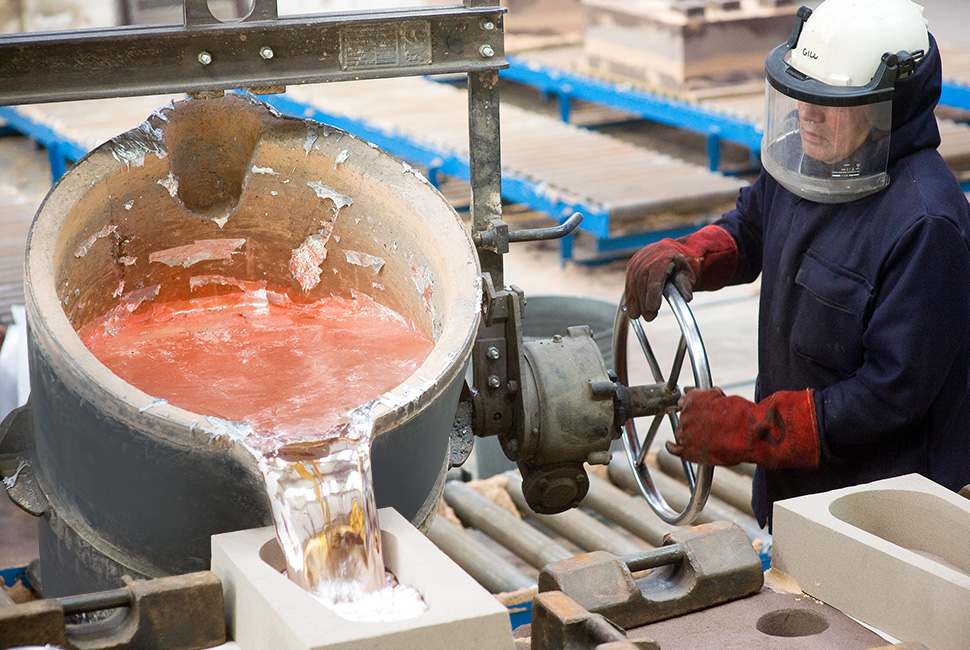
In aluminum casting, efficient quality assurance procedures are important to guarantee item integrity. Secret components include strenuous material assessment procedures and continuous procedure tracking techniques. These actions help determine prospective flaws early, inevitably boosting the top quality of the final product.
Material Assessment Protocols
A durable product evaluation method is vital for assuring the integrity of aluminum spreadings. This method generally consists of a collection of organized checks that assess basic materials before they go into the production process. Secret procedures consist of verifying the chemical composition of aluminum alloys with spectroscopic evaluation, ensuring conformity with market requirements. Visual inspections are likewise conducted to detect surface area issues or pollutants. Furthermore, metallurgical screening, such as tensile strength evaluations and microstructure examinations, ensures the material will certainly do as expected under functional problems. By adhering to stringent material evaluation methods, foundries can lessen issues, enhance item integrity, and eventually enhance customer complete satisfaction. This foundational step is vital for attaining high-grade aluminum spreadings that meet certain performance requirements.
Process Keeping An Eye On Strategies
Executing procedure monitoring techniques is crucial for preserving quality assurance in aluminum casting procedures. These methods entail organized monitoring and dimension of numerous specifications throughout the spreading process. Key methods consist of temperature level tracking, which guarantees the liquified steel is at excellent warmth for putting, and pressure surveillance throughout mold and mildew filling up to avoid issues. In addition, real-time data analysis allows for instant adjustments, decreasing the possibility of mistakes. Aesthetic evaluations at critical points better boost top quality guarantee by determining prospective defects prior to they impact the end product. The integration of automated systems for continuous surveillance can simplify procedures, boost uniformity, and ultimately result in exceptional aluminum castings that meet rigid market requirements. Such techniques are vital for accomplishing ideal efficiency and client contentment.
The Influence of Quality Assurance on Client Complete Satisfaction
Quality control plays a necessary duty in improving product dependability, which straight affects client fulfillment. By preserving regular performance criteria and lowering issue prices, foundries can promote count on and loyalty amongst their customers. This dedication to high quality not only satisfies consumer expectations however can also bring about duplicate business and favorable references.
Boosted Item Reliability
Although difficulties in aluminum foundries can occur from variations in products and procedures, strict quality control measures significantly boost item dependability. By executing strenuous examination protocols and standardized testing, foundries can assure that each aluminum item satisfies certain performance requirements. This positive strategy reduces incongruities and issues, which directly impacts the resilience and performance of the last items. Dependable products not only fulfill client assumptions yet likewise foster rely on the brand name, bring about repeat business and positive word-of-mouth recommendations. Additionally, enhanced integrity decreases the possibility of returns or remembers, inevitably saving costs and improving overall operational effectiveness. In this competitive market, preserving high product reliability via quality assurance is crucial for maintaining consumer complete satisfaction and loyalty.
Consistent Performance Standards
When aluminum foundries comply with consistent performance requirements, they considerably boost consumer fulfillment. By establishing clear benchmarks for high quality, these foundries guarantee that items fulfill client expectations each time. Uniformity in efficiency not only constructs count on yet likewise fosters lasting partnerships with clients. Consumers rely upon foundries to supply items that match defined needs, and any type of variance can bring about discontentment. Regular requirements additionally allow foundries to enhance their operations, reducing the time invested on rework and modifications, which benefits both the supplier and the customer. Additionally, the predictability in quality permits consumers to plan their projects much more efficiently, understanding that they will certainly receive dependable items promptly. To sum up, keeping constant performance requirements is essential for achieving high levels of customer fulfillment.
Decreased Problem Prices
Carrying out stringent quality assurance steps substantially lowers issue prices in aluminum foundries, directly improving client satisfaction. By methodically monitoring production processes and performing thorough assessments, foundries can determine and remedy concerns prior to items reach consumers. This positive approach minimizes the event of issues, leading to less item returns and grievances. As defect prices decrease, customers experience greater integrity and consistency in the products they get. This not only cultivates count on in the brand name but additionally urges repeat business and positive word-of-mouth recommendations. In addition, pleased consumers are a lot more likely to suggest the foundry to others, ultimately causing raised market share and success. Reliable high quality control serves as a keystone for achieving excellence in customer relations and overall organization success.
Expense Implications of Poor High Quality Control
Poor quality control in an aluminum foundry can lead to significant monetary effects, as defects in products often necessitate see this website pricey rework or ditching. This not only enhances production expenses yet additionally hold-ups distribution timelines, hurting consumer relationships and possibly bring about shed future agreements. In addition, the resources expended on defective products, including labor and materials, result in lessened general efficiency and success for the foundry.
Furthermore, bad high quality can taint the foundry's reputation, causing decreased market competition and a decrease in customer trust. The economic effects extend past instant losses, as a damaged reputation may discourage brand-new service opportunities. In industries where aluminum components are critical, such as aerospace and automotive, the risks are even greater, with regulative compliance and security considerations intensifying the costs connected with low quality control. Ultimately, the long-lasting sustainability of the foundry is at threat without a durable high quality monitoring system in position.
Situation Studies: Success Stories of High Quality Control Application
Effective high quality control implementation in aluminum foundries has brought about remarkable enhancements in operational efficiency and consumer complete satisfaction. One excellent situation entailed a mid-sized foundry that took on rigorous quality assurance methods, including real-time monitoring of thaw temperatures and product make-ups. Consequently, problem prices dropped by 30%, substantially minimizing revamp prices and improving product dependability.
Another success story is a large foundry that integrated automated assessment systems within its assembly line. This investment enabled for immediate recognition of non-conformities, lowering manufacturing delays and enhancing throughput by 20% - Aluminum Casting. Customer responses enhanced as well, with satisfaction ratings rising because of a significant reduction in item failures
In both instances, the commitment to quality assurance not just enhanced operations yet likewise strengthened the foundries' online reputation out there, showing exactly how tactical quality campaigns can promote long-lasting success and competitive benefit in the aluminum industry.
Future Fads in High Quality Control for Aluminum Foundries
As the aluminum foundry industry progresses, the integration of innovative technologies is positioned to redefine quality assurance practices. Automation and man-made intelligence will certainly play critical functions in boosting precision and effectiveness. Real-time monitoring systems, using IoT sensors, are anticipated to supply continual data on manufacturing processes, allowing prompt modifications and reducing problems.
In addition, artificial intelligence algorithms will certainly examine historical data to anticipate possible top quality issues before they develop, helping with positive measures. The adoption of digital doubles-- digital replicas of physical processes-- will enable foundries to mimic different circumstances, optimizing quality outcomes without interfering with real production.
Frequently Asked Inquiries
Just How Does Temperature Affect Aluminum Casting High Quality?
Temperature level greatly affects aluminum spreading high quality; incorrect temperatures can bring about issues such as porosity and incorporations. Preserving suitable casting temperatures guarantees far better fluidness, consistent solidification, and eventually boosts the integrity and performance of the final item.
What Certifications Are Important for Aluminum Foundries?
Important certifications for aluminum foundries include ISO 9001 for top quality administration, ISO 14001 for ecological management, and AS9100 for aerospace standards. These qualifications guarantee conformity, enhance item dependability, and show commitment to quality and sustainability.
Exactly How Frequently Should Quality Control Audits Be Carried Out?
Quality assurance audits must be conducted routinely, ideally quarterly, to guarantee regular product standards (Casting Foundry). Nevertheless, the regularity might vary based upon manufacturing quantity, previous audit outcomes, and certain sector laws or client demands
Can Environmental Aspects Influence Casting High Quality?
Yes, ecological aspects can greatly affect casting look here top quality. Variables such as humidity, temperature, and air structure influence metal homes and mold actions, possibly causing issues and variances in the final aluminum items created.
What Role Does Staff Member Training Play in Quality Assurance?
Staff member training is important for quality assurance, as it equips workers with vital abilities and expertise. Well-trained workers can determine issues, adhere to procedures, and add to consistent production requirements, inevitably boosting total product quality.
Quality control in an aluminum foundry serves as a crucial element in ensuring item excellence. In aluminum spreading, effective top quality control measures are necessary to assure product stability. Quality control plays an essential function in enhancing item reliability, which directly influences client complete satisfaction. Challenges in aluminum foundries can develop from variants in materials and procedures, strict top quality control steps greatly improve product integrity. Poor quality control in an aluminum foundry can lead to significant monetary consequences, as problems in products frequently demand expensive rework learn the facts here now or junking.
Comments on “Why custom design capabilities in an aluminum foundry empower automotive innovation”